














Turkey's Policy of Balance Between NATO and Russia Has Historical Roots

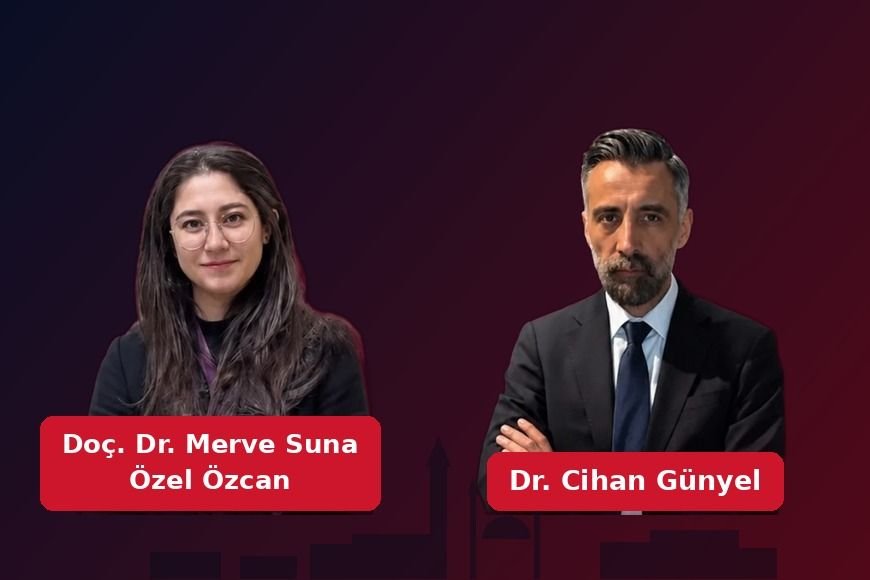
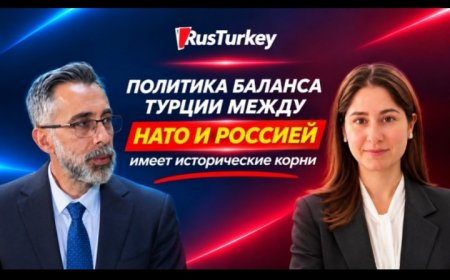
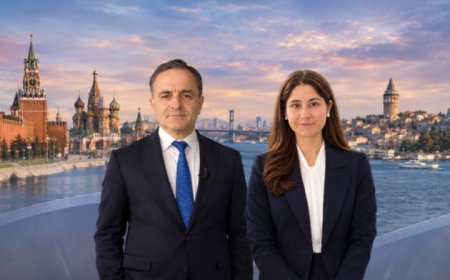
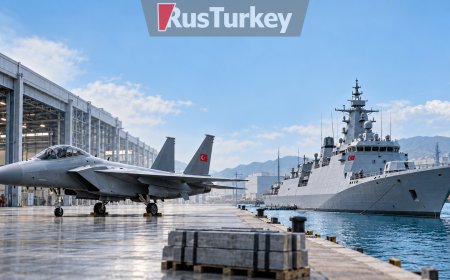
Turkey does not see its relations with NATO and Russia as mutually exclusive, and Ankara's ability to talk to both sides rests on many years of experience. That is the conclusion reached in interviews with RusTurkey.com by Cihan Günel, a political scientist with a doctorate in political science, and Merve Suna Özel Özcan, associate professor at the Department of International Relations at Kırıkkale University. Günel traces the policy of balance from the Cold War to the Istanbul talks; Özel Özcan explains it through the concept of stability diplomacy.
Cihan Günel does not date this policy from the Russia-Ukraine conflict, or even from the breakup of the Soviet Union. In a September interview with RusTurkey.com he reconstructed the entire line from the Cold War to the present day.
"Turkey is an important member of NATO. The North Atlantic Alliance was founded in 1949, and Turkey joined it in 1952.
Until the 1960s, relations between the USSR and Turkey remained tense under the influence of the Cold War. In 1964, however, disagreements with the United States over the Cyprus issue pushed Ankara to look for a new foreign policy balance. A period of warming relations with the Soviet Union began.
In 1967 the Agreement on Technical and Economic Cooperation was signed. With Soviet loans and technical support, major industrial projects were carried out, including the İskenderun iron and steel works, the Seydişehir aluminium plant and the Aliağa oil refinery.
In 1972 the two countries signed the Declaration on the Principles of Good-Neighborly Relations. Political dialogue picked up, yet Turkey gave up neither its NATO membership nor its pro-Western orientation.
In this way, Ankara managed to build a balance between the USSR and the West.
In essence, this policy continued after the breakup of the Soviet Union as well. Turkey's relations with the Russian Federation likewise developed on the basis of maintaining balance.
Regional tensions and conflicts directly affect the interests of both countries. It is clear that armed clashes and security threats in the Black Sea affect above all the stability of Turkey, Russia and the other littoral states.
At the same time, the strategic importance of the Black Sea is not limited to security issues. It plays a vital role in the trade and economies of the coastal countries.
Regardless of membership in any military-political alliances, conflicts and tensions in the Black Sea become a shared problem for all the states of the region. The current situation therefore calls for joint and responsible action by Turkey, Russia and the other littoral countries.
The Montreux Convention Regarding the Regime of the Straits has long played an important role in preserving the existing order in the Black Sea.
Turkey views what is happening not only from the position of a NATO member but above all as a Black Sea state that takes into account its own interests and the security of the other coastal countries.
Ankara has no interest in changing the established regional order or in the emergence of new threats that could turn the Black Sea into a zone of even sharper confrontation and endanger the stability of the region and the security of neighboring states.
I therefore believe that in the coming period Turkey will continue to follow a policy of balance, preserving the independence of its foreign policy course and taking part in diplomatic efforts to end the Russia-Ukraine conflict.
In my view, Turkey's room for maneuver is not so much narrowing as taking on new significance: the country will keep its role as one of the key participants in settling the conflict."
Merve Suna Özel Özcan assesses these relations in the same way, through their historical depth. She considers their defining quality to be the ability of the two countries to preserve common interests where their positions diverge.
"Assessing Turkey-Russia relations, I believe above all that relations between the two countries cannot be explained by today's political events alone. These are relations with very deep roots, with historical, geopolitical and economic dimensions. Turkey and Russia are two important regional powers that have at times competed and at times developed cooperation throughout history. So even today, what defines the nature of these relations is not that they think alike on everything, but that they are able to preserve common interests despite the areas in which their positions diverge.
I view the foreign policy Turkey has pursued in recent years above all through the concept of stability diplomacy. Turkey is a country that directly feels the consequences of the crises taking place in its region. Across a vast expanse, from the Black Sea to the Caucasus, from Syria to energy security, it has interests that intersect with Russia's. In such an environment, the main thing for Turkey is not only to develop bilateral relations but also to maintain the diplomatic foundation that will preserve regional stability.
Today there is intensive political dialogue, an important partnership in energy and mutual economic interests between Turkey and Russia. That does not mean, however, that the two countries take the same approach to every regional issue. Turkey's support for Ukraine's sovereignty and territorial integrity is an important example of this. Here I would like to point out the following: diplomacy grows stronger not only through common interests but also through the ability to manage disagreements."
From this follows her answer to the question Ankara is asked constantly: should Turkey choose between NATO and Russia?
"I do not consider correct the assessment that Turkey must make a choice between NATO and Russia. Turkey's NATO membership represents institutional security relations with a history of many years. The diplomatic and economic relations it develops with Russia, in turn, are the result of Turkey's geographical position, its regional responsibility and its national interests. Turkey's NATO membership does not mean it cannot talk to Russia, just as cooperation with Russia does not mean it is moving away from its commitments within NATO. The main thing here is for Turkey to be able to maintain relations with different actors while preserving its own security priorities. I see this as an approach in which strategic autonomy and stability diplomacy complement each other. Turkey's policy is not about being equally distant from both sides but about being able to talk to both sides while preserving its own principles.
The application of the Montreux Convention Regarding the Regime of the Straits is also important from this point of view. Since the start of the war, Turkey, exercising the powers and duties arising from the Montreux Convention, has held to a position aimed at preventing the further spread of military tension in the Black Sea."
How balanced Turkey's position looks from the outside is something Günel assessed back in a January interview with RusTurkey.com, answering a question about the Russia-Ukraine conflict.
"First of all, Turkey's position should be considered in light of its NATO membership. After the start of Russia's military operation in Ukraine, the situation effectively grew into a war between two states. NATO sided with Ukraine and imposed large-scale diplomatic, economic and technological sanctions against Russia. Alliance members, above all the United States, have provided and continue to provide Ukraine with financial and military support. De facto, the situation has taken the form of a confrontation between NATO and Russia.
Against this background, Turkey took a position different from that of most of its alliance partners and the European powers. It did not join the sanctions in full, continued purchasing energy resources, observed the provisions of the Montreux Convention and did not break off diplomatic relations with Russia. Contacts between Presidents Putin and Erdoğan were maintained. At the same time, Turkey did not change its position on Crimea, considering it territory of Ukraine, and continued military-economic cooperation with Kyiv.
Looking at the situation from the standpoint of a NATO member country, one can say that Turkey demonstrates a striving for a more autonomous and independent foreign policy. Unlike many NATO and EU countries, Ankara has not defined Russia as an enemy or a direct threat; it regards the conflict as a confrontation between two neighboring states in the Black Sea region and advocates its diplomatic and peaceful settlement. On the whole, Turkey tries to maintain a more measured and balanced position."
This course also has a practical dimension, the expert reminds us: Ankara's ability to talk to Moscow and the West at the same time has already turned into concrete diplomatic agreements.
"Even before the grain agreement was concluded, on March 29, 2022, Turkey organized talks in Istanbul between the Russian and Ukrainian delegations. Russian President Vladimir Putin later said that the sides had reached certain agreements on peace at that time, but, in his words, British Prime Minister Boris Johnson persuaded Ukrainian President Volodymyr Zelensky to abandon those agreements. In effect, the conflict could have been settled at an early stage, before the deaths of thousands of people.
It was probably Turkey's first mediating mission that created the atmosphere of trust which later made the grain corridor agreement possible. However, despite formal commitments, Western countries did not ensure the normal functioning of the insurance and freight mechanisms for Russian ships, which ultimately led to the collapse of the agreement. Turkey can perform the role of mediator, but the key question lies in the readiness of Western states to honor agreements and the norms of international trade."
On whether Turkey can once again become a venue for peace initiatives, Günel reasons as follows.
"President Erdoğan's personal contacts with Vladimir Putin and Donald Trump, as well as the four rounds of talks between the Russian and Ukrainian delegations already held in Istanbul, significantly increase the likelihood that Turkey will once again become a venue for peace initiatives. If a full-fledged negotiating format takes shape, Istanbul may well be considered one of the key places for holding talks."
And whether Ankara has secured a special role between East and West, he assesses cautiously but in the affirmative.
"Yes, to a certain extent. Being a member of NATO while at the same time maintaining equal relations with Russia as a neighboring and sovereign state, Turkey strives to pursue a more independent foreign policy. The organization of talks between the Russian and Ukrainian sides in Istanbul, prisoner exchanges and the implementation of the grain deal confirm its ability to act as a diplomatic mediator. All of this makes it possible to speak of Turkey taking on the role of a kind of bridge between East and West."
Günel calls this course a policy of balance; Özel Özcan speaks of stability diplomacy and strategic autonomy. The wording differs, but the experts' conclusion is the same: in their assessment, Ankara does not intend to choose between NATO and Russia, because its influence rests on the ability to work with both sides. Günel believes Turkey will continue to hold to this line and reminds us that the approach itself has been tested over decades.
Самое важное за день — без воды