













































Moscow in the Shadow of the Middle East Conflict: New Perspectives
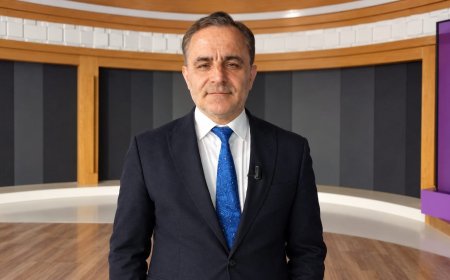
Renowned Turkish expert Cihan Günyel reflects on new opportunities for Russian foreign policy


RT: How do you assess Russia's strategic role amid the rapidly escalating tensions between Iran, the US, and Israel in the Middle East? What is Moscow really trying to achieve or preserve in this crisis?
— The military operation (or more accurately, war) launched by the US and Israel against Iran has undoubtedly become one of the pivotal factors in the new stage of geopolitical transformation in the Middle East. This event has already set in motion processes affecting not only regional, but also global players from different sides. It is important to note that, in Russia’s case, it would be a mistake to limit its role to the Syrian context alone. Today, despite its allied relationship with Iran, Russia is actively developing cooperation with leading international institutions, such as the SCO and BRICS, together with the Gulf States, with which it maintains well-developed bilateral relations. Turkey, Egypt, Pakistan, and other countries outside the Gulf are also involved in these structures as full or observer members.
Another important aspect is the close historical and human ties between Russia and Israel: Russian is widely spoken among Israelis, and a significant portion of Israel’s population consists of immigrants from Russia and the former USSR. There are even military relations between these countries; for instance, Israel does not supply weapons to Ukraine and makes it a condition that weapons exported to Eastern European countries are not used against Russia. This demonstrates that although Russia is not always at the forefront, it holds a highly influential position in the region.
The escalation of military conflict between Iran and Israel, with the involvement of other regional players, could threaten the role of the SCO and BRICS as new alternatives to the international system challenging US and Western hegemony. If long-term security threats become entrenched among regional states, this would open the way for the US to become the chief architect of a new “security architecture” and strengthen Western influence in the Middle East. In such a case, the SCO and BRICS, where Russia and China are key players, may lose their strength and value as alternatives to Western institutions and as a potential foundation for a new world order.
Moreover, the military and technical support of Ukraine by the Gulf states and Israel, and the further development of their military cooperation, could spill over into the Ukraine conflict, increasing pressure on Russia and influencing diplomatic processes. Israel’s lobbying power in the US and the financial capabilities of Dubai could become significant factors in the confrontation between Russia and Ukraine. As a global player, Russia will strive to curb the “militarization” of the American position regarding Ukraine, to prevent a new wave of military support—especially in the context of the peace negotiations that have begun. A regime change in Iran and the advent of pro-Western forces would mark a new phase of US influence in the Middle East, and a strategic US alliance with Tehran could become a challenge for Russia not only in the Caucasus region (via the Zangezur corridor), but in its entire historical sphere of influence.
NATO in Europe, the US, and their allies in the Caucasus region—all this could turn Eurasia into an arena of new competition between Russia and the West. Strategic communications, supply corridors, transport, and energy flows in the region may also come under the threat of disruption for both Russia and China. Thus, the West gains new avenues for pressure on both sides, and the unfolding of the situation increasingly resembles a grand chess game, as described by Zbigniew Brzezinski. Russia will strive to consider interests in three geopolitical spaces at once—the Middle East, Eastern Europe, and the Caucasus—developing an integrated strategy across all these fronts.
RT: How do you assess the recent escalation between the US and Iran? How do such crises impact international equilibrium?
— Overall, the war between the US, Israel, and Iran reflects the shift of the international system from a law-based structure to an order built on brute force. The policy of “peace through strength,” pursued during Donald Trump’s second term, is a direct confirmation of this trend. The US and the West, as they lose their status as chief global managers, are making the roles of regional players ever more apparent, while Russia and China are emerging as independent, decisive actors on a global scale.
For Israel, an attack on Iran is a matter of existential threat, whereas for the US, a strike against Iran is seen as an attempt to change, or at least weaken, the Iranian regime and break its strategic alliance with China and Russia—much like Washington’s actions in Venezuela. Should a US-leaning leadership come to power in Tehran, this would spell trouble for China not only in the sphere of energy resources, but also in terms of blocking the integration routes of the “Belt and Road” initiative. The West’s zones of influence in the Caucasus and Central Asia would expand, and Western companies would gain access to the region’s resources. As a result, the influence of Russia and China in Eurasia would be undermined. The positioning of the Zangezur corridor as the "Trump corridor" further integrates the South Caucasus and Caspian region into the US sphere of interest.
RT: In such crises, does Russia primarily act as a balancing power, or is it mainly defending its own strategic interests?
— Russia has been engaged in a military conflict with Ukraine for over four years, remaining under harsh sanctions from the West and the US. During this period, even in its traditional spheres of influence, such as Syria, Russia has encountered changes—the new regime in Damascus is now leaning more towards the West. If regime change or “adaptation” towards the US takes place in Iran as well, Russia’s sphere of influence will be under threat—not just in the Middle East, but also in Central Asia and the Caucasus. Furthermore, a hit to the Russia–China–Iran axis would undermine the idea of building an alternative, non-centric international system, leading to a decline in the prestige of the SCO and BRICS as alternatives to Western institutions for resolving conflicts. This would call into question their capacity to serve as genuine alternatives. In such a situation, Russia and China will most likely pursue a strategy aimed at preventing regime change in Iran.
If, as with Venezuela, the Iranian regime becomes pro-Western, the whole network of Russia’s and China’s allies will be destabilized, raising questions about the reliability of any cooperation with them, and even about the status of these powers as major players with mechanisms for resolving global crises.
RT: Do you think the US-Iran standoff contributes to strengthening or, on the contrary, complicating Russia’s international position?
— The answer to that question will become clearer in the coming weeks. If Russia presents itself as an arbiter in the matter of Iran’s sovereignty, acts as a guarantor in peace talks, and plays a leading role in resolving the Iranian nuclear issue, its position in the world will be noticeably strengthened. In the short term, Moscow has already benefited from a partial lifting of US sanctions on Russian energy exports amid the crisis in the Strait of Hormuz. Russian energy resources are, once again, coming to the fore in conditions of a global energy crisis.
RT: How do such crises affect the relationships within NATO and the sense of alliance unity?
— Donald Trump’s second term has also acted as a catalyst for divisions within NATO. He effectively reduced the significance of the European security architecture, demanded that alliance partners take on greater responsibility, challenged defense budget sizes, negotiated with Russia without European participation during the Ukrainian peace process, and took steps towards normalizing relations with Moscow. All this has probably led to the greatest rift in NATO history. Specifically regarding the Iran/Israel conflict, the US, contrary to established tradition, excluded Britain and France from operations and proposed that NATO intervene in the Strait of Hormuz—yet another move deepening divisions. Many allies did not support the initiative, considering it lacked legitimacy, and Trump in response labelled NATO a “paper tiger,” even publicly suggesting the US drop out of the alliance. Spain’s recent refusal to provide military bases for operations against Iran, and Trump’s remarks about expelling Spain from NATO, confirm the scale of the conflict between the US and European allies. I believe Trump’s second term will usher in a period of new crises for the West.
RT: Does the caution of European countries in such situations create advantages for Russia?
— The caution of Europe and of Russia has different origins. Europe, feeling threatened by Russia, has shifted focus to a security architecture of its own, taking into account the aftermath of the “Arab Spring” (migrant flows and terrorist attacks), while the potential fall of the Iranian regime raises fears of a repeat of those scenarios. The EU, already facing problems because of the oil embargo against Russia and trying to find alternative energy sources, will find itself in even greater difficulty if the Strait of Hormuz is blocked. The rise in oil prices, which benefits Russia, will help it strengthen its economy and fund military operations in Ukraine—potentially spelling another round of economic hardship for Europe. The energy factor is a serious lever for Moscow, not only with respect to the Strait of Hormuz, but also in other aspects of its broader strategy.
RT: In your view, how will such conflicts and crises shape Russia’s long-term foreign policy?
— In the long term, Russia will likely strive to resolve the Ukrainian issue to its own advantage, to preserve its historic spheres of influence in its near abroad, to build up a system of alliances in opposition to the Western international system, and to retain the deterrent potential of its military power—especially given rapid changes taking place in the doctrines of asymmetric warfare. Military power, as well as traditional geographic and climatic advantages, have always served Russia as an additional strategic asset. Thus, Russia will continue a strategy based on composure, patience, foresight, and flexible diplomacy.