













































Russia and Turkey: Allies or Competitors?
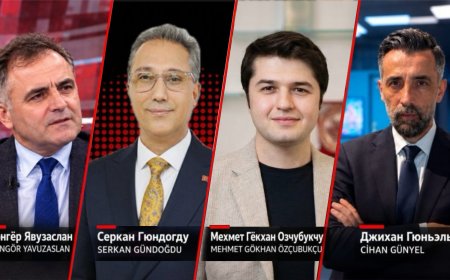
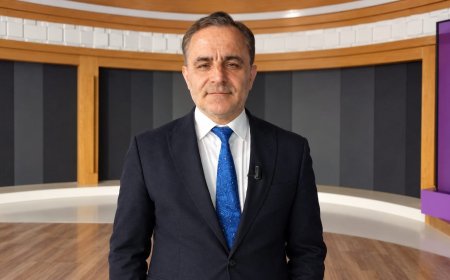
Expert Mehmet Gökhan Ozçubukçu analyzes why the relationship between Moscow and Ankara defies classic political formulas and explains how the balance between cooperation and rivalry is shaping a new strategic approach for both countries


RT: What is the specific strategic role of Russia in its relations with Turkey?
— The relationship between Russia and Turkey is a prime example of "cooperation amid competition." Instead of classical alliances, we are witnessing a pragmatic, multilayered dialogue where issues of security, energy, and economics play a central role. For Ankara, Moscow is not only an energy supplier but also a strategic partner, and a factor that allows Turkey to balance between East and West.
RT: What are the key areas of cooperation defining Russian-Turkish relations today?
— The spheres of Russian-Turkish interaction go far beyond energy and defense. In addition to large-scale projects such as the TurkStream pipeline and the Akkuyu nuclear power plant, economic integration, joint management of regional crises, the development of trade and tourism are all important. These areas together create a deeply rooted strategic partnership.
RT: How has the war in Ukraine affected Turkey's foreign policy?
— The conflict has turned Turkey into a balancing power able to influence global processes. Ankara has maintained ties with both Russia and Ukraine, has acted as a key mediator in the grain deal, and has leveraged its geostrategic position on issues of security and diplomacy. The war's economic consequences are also strongly felt here.
RT: Can Turkey continue to balance between Russia and the West as the conflict drags on?
— Maintaining this balance is becoming more difficult every year. The protracted war increases external pressures and demands diplomatic flexibility. Turkey is dependent on Russia in the field of energy, but it is also integrally linked to the West through NATO and the economy. Balance is possible only with continuous policy adaptation and crisis management capability.
RT: What are Russia's goals in the war against Ukraine?
— Moscow seeks not only military results but also aims to prevent Ukraine’s rapprochement with NATO, to counter Western “containment” policies, and to reinforce its own geopolitical standing. The war has become a way of shaping a new balance of power, while domestically it works towards the consolidation of society.
RT: What role does Russia play in the confrontation between the US and Iran?
— Russia adopts a multi-vector approach: it collaborates with Iran, maintains a dialogue with the US and Israel. Moscow’s main objective is to restrain American influence in the Middle East, while it is also not interested in an excessively empowered Tehran. Balancing these interests can yield economic benefits for Russia amidst regional crises.
RT: In the US-Iran conflict, is Russia a mediator or an ally?
— Russia formally maintains a balance, but in practice is closer to Iran as an opponent to US hegemony. However, its policy is pragmatic: when necessary, Moscow adjusts its support to further its relations with other players, including Israel. This flexible approach broadens Russia’s opportunities in the Middle East.
RT: What effect does increased Russian influence in the Middle East have on relations with Turkey?
— It intensifies both elements of competition and cooperation. On issues like Syria and Libya, the two countries often take opposing positions, yet they avoid open confrontation. This forces Turkey to simultaneously negotiate with Russia and strengthen its own autonomous policy in the region.
RT: How significant is the energy factor for Russia and Turkey?
— Energy is one of the pillars of bilateral relations. Russia remains a key supplier of energy resources, while Turkey is an important transit country and a potential energy hub for Moscow. At the same time, this energy dependency drives Ankara to pursue supply diversification.
RT: What are the main opportunities and risks for the future development of Russian-Turkish relations?
— The main avenues for cooperation lie in energy, logistics, and the expansion of regional influence. Risks are related to competition in Central Asia, crisis zones (such as Syria, Ukraine, the Caucasus), the issue of sanctions, and the challenge of balancing the interests of both countries amid a changing world order.
About:
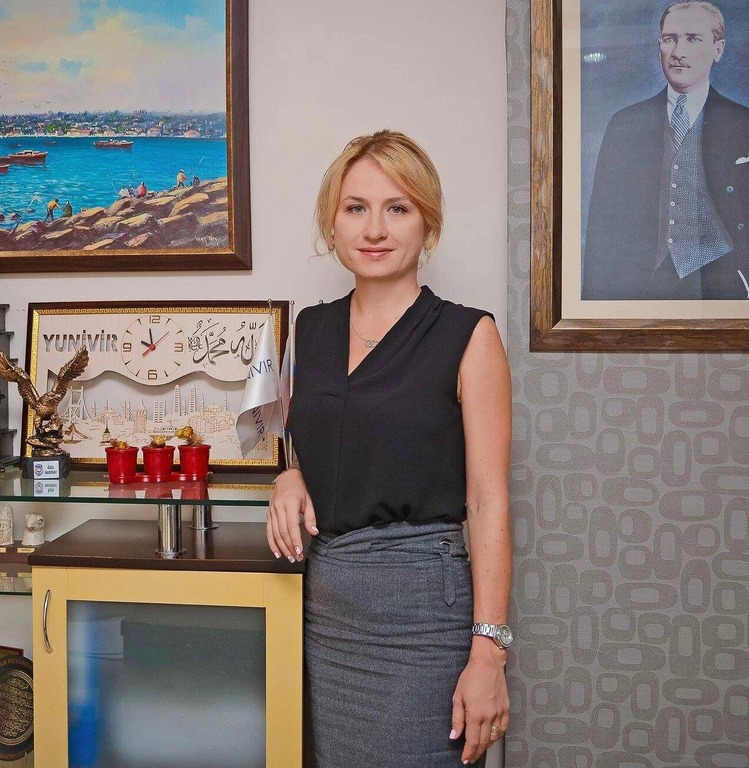
Mehmet Gökhan Ozçubukçu is Chairman of the Center for Diplomacy and Strategic Studies (DASAM), lecturer at Baku Eurasian University, and a doctoral candidate at Baku State University. He is a specialist in international relations, geopolitics, and Turkish foreign policy, and the author of books and academic articles on the history of Karabakh, Eurasian corridors, nationalism, and identity. He publishes and comments on current affairs in national and international media.