
























Cihan Günyel: “Turkey Will Maintain Its Policy of Balancing Between NATO and Russia”

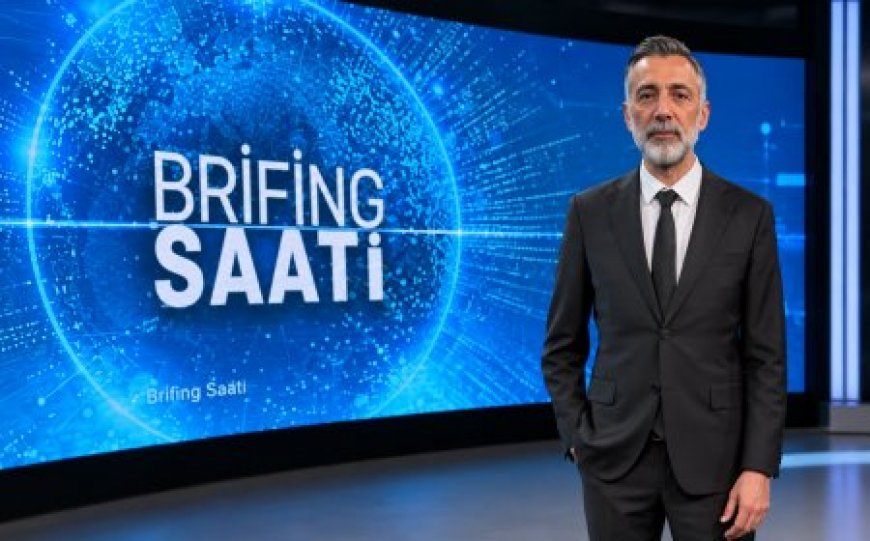
Turkish international relations expert Cihan Günyel on Black Sea security, the role of the Montreux Convention, Ankara’s relations with Moscow, and the prospects for a diplomatic settlement of the Russia-Ukraine conflict
“Turkey Will Remain a Key Player in Efforts to Resolve the Conflict”
RT: As NATO strengthens its security posture in the Black Sea, Turkey, on the one hand, continues to fulfill its obligations to the Alliance while, on the other, seeking to avoid direct confrontation with Russia. Do you believe Ankara will be able to maintain this delicate balance between NATO and Russia in the coming years? Is Turkey gaining more room to act as an independent regional player, or is that room gradually narrowing?
Cihan Günyel: Turkey is an important member of NATO. The North Atlantic Alliance was established in 1949, and Turkey joined it in 1952.
Until the 1960s, relations between the Soviet Union and Turkey remained tense under the influence of the Cold War. However, in 1964, disagreements with the United States over the Cyprus issue prompted Ankara to seek a new balance in its foreign policy. This marked the beginning of a period of rapprochement with the Soviet Union.
In 1967, the two countries signed an Agreement on Technical and Economic Cooperation. With Soviet loans and technical assistance, major industrial projects were implemented, including the Iskenderun Iron and Steel Works, the aluminum plant in Seydişehir, and the oil refinery in Aliağa.
In 1972, the two countries signed a Declaration on the Principles of Good-Neighbourly Relations. Political dialogue intensified, yet Turkey neither abandoned its NATO membership nor its pro-Western orientation.
In this way, Ankara succeeded in establishing a balance between the Soviet Union and the West.
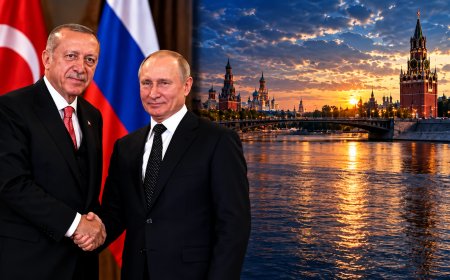
In essence, this policy continued after the dissolution of the Soviet Union. Turkey’s relations with the Russian Federation have likewise developed on the basis of maintaining a balance.
Regional tensions and conflicts directly affect the interests of both countries. It is clear that armed confrontations and security threats in the Black Sea have an immediate impact on the stability of Turkey, Russia, and the other coastal states.
At the same time, the strategic importance of the Black Sea is not limited to security issues. It also plays a vital role in the trade and economies of the coastal countries.
Regardless of their membership in any military or political alliances, conflicts and tensions in the Black Sea become a common concern for all states in the region. The current situation therefore requires Turkey, Russia, and the other Black Sea states to act jointly and responsibly.
The Montreux Convention Regarding the Regime of the Straits has long played an important role in preserving the existing order in the Black Sea.
Turkey views developments not only from the perspective of a NATO member, but first and foremost as a Black Sea state that takes into account its own interests as well as the security of the other coastal countries.
Ankara has no interest in changing the established regional order or in allowing new threats to emerge that could turn the Black Sea into an arena of even sharper confrontation and jeopardize regional stability and the security of neighbouring states.
I therefore believe that, in the coming period, Turkey will continue to pursue a policy of balance, maintaining an independent foreign policy while participating in diplomatic efforts aimed at bringing the Russia-Ukraine conflict to an end.
In my view, Turkey’s room for manoeuvre is not so much narrowing as acquiring new significance. The country will retain its role as one of the key players in efforts to resolve the conflict.
“The Montreux Convention Ensures the Security of Not Only Turkey, but Russia as Well”
RT: Attacks on commercial vessels in the Black Sea have become more frequent recently. Vessels linked to Turkey have also been exposed to these risks, making the issue of regional security more immediate for Ankara. Could these developments lead to changes in Turkey’s policy toward Russia, NATO, and Black Sea security more broadly? What role will the Montreux Convention play in ensuring Turkey’s security and preserving the regional balance in the future?
Cihan Günyel: Through the Montreux Convention, Turkey secured its own position in the Black Sea while also contributing to the establishment of a regional order that has existed since 1936.
The Convention limits the ability of NATO and other external actors that are not Black Sea states to expand their military presence in the region and create security threats for the coastal countries.
In particular, the Convention establishes the following restrictions:
-
The total tonnage of foreign warships passing through the Straits at any one time may not exceed 15,000 tons, while the number of such vessels may not exceed nine.
-
The aggregate tonnage of warships belonging to non-Black Sea states present in the Black Sea is limited to 45,000 tons.
-
No single non-Black Sea state may account for more than 30,000 tons.
-
Warships belonging to non-Black Sea states may remain in the Black Sea for no longer than 21 days.
-
The passage of aircraft carriers and submarines is restricted, except in cases provided for under the Convention concerning submarines belonging to Black Sea states.
Looking at these provisions, it becomes clear that their primary purpose is to prevent external actors from establishing a dominant military presence in the Black Sea and creating additional security threats for other states.
The Montreux Convention is often misunderstood as primarily restricting Russia in the Black Sea. In my view, the opposite is true.
The restrictions on tonnage and the duration of stay of warships belonging to non-Black Sea states constrain the ability of other actors to expand their influence in the region.
The Black Sea and the Turkish Straits provide Russia with access to the world’s oceans. The Black Sea itself can be regarded as a semi-enclosed sea.
The historical experience of the Crimean War of 1853–1856 had a significant impact on Russia’s perception of regional security.
The participation of the major European powers of the time, Britain and France, in the Crimean War, as well as the operations of their naval forces in the Black Sea, contributed to shaping Russia’s historical memory regarding security in the region.
For this reason, the Montreux Convention is of great importance not only to Turkey, but also to Russia and the other Black Sea states.
This is precisely why Ankara seeks to prevent the established order from being undermined.
Turkey maintained this position even during the Second World War and the Cold War. Its approach remains equally consistent today.
In addition to preserving the existing regional order, Ankara has no intention of abandoning its role in efforts to achieve a diplomatic settlement of the conflict between Russia and Ukraine or its objective of maintaining balanced relations with both countries.
I believe Turkey will not permit actions by external actors that could adversely affect its security, alter the established regional order, or jeopardize the safety of navigation in the Black Sea.
Recent developments demonstrate how important it is for Turkey and the other coastal states, which have a deep understanding of the region’s historical characteristics, to play a more active role in resolving existing problems.
“A New Security Architecture Should Not Undermine the Existing Order in the Black Sea”
RT: Despite being a NATO member, Turkey remains one of the few countries in the Alliance capable of maintaining political and economic dialogue with Russia. At the same time, Ankara has proposed reviving a diplomatic mechanism that would ensure the safety of navigation and grain shipments in the Black Sea. Could Turkey’s ability to maintain direct communication between Moscow and the West strengthen its strategic role not only as a mediator, but also in shaping a new European and Black Sea security architecture?
Cihan Günyel: As I have already noted, the rights granted to Turkey under the Montreux Convention provide security not only for Turkey itself, but also for the other Black Sea states.
In my view, an attempt to establish a new security architecture in the Black Sea involving external actors that have no coastline on the sea would amount to dismantling the regional order that has developed over many decades.
This, in turn, could create new security threats, increase the risk of conflict, and lead to the emergence of an unstable regional system.
I do not believe that all Black Sea states would want to see the order established under the Montreux Convention changed. Russia, in particular, would not want such a change.
Furthermore, Turkey and Russia, as two neighbouring states, maintain balanced relations.
Their cooperation spans numerous areas, ranging from trade and energy to security and the construction of a nuclear power plant.
In the Middle East and North Africa, the positions of the two countries sometimes diverge, and they may support opposing sides. However, in regions close to their own borders and of mutual interest, Ankara and Moscow seek to act on the basis of mutual understanding, respect for each other’s security interests, and mutual trust.
I believe that Turkey and Russia may have different approaches to the architecture of European security, just as their foreign policy positions may differ in other regions.
However, because of its geographical location, strategic importance, and historical experience in the field of security, the Black Sea represents a distinct area of strategic importance for both countries.
For this reason, in my view, neither Turkey nor Russia will allow external actors or defence alliances to undermine the existing order in the Black Sea.
About the Expert
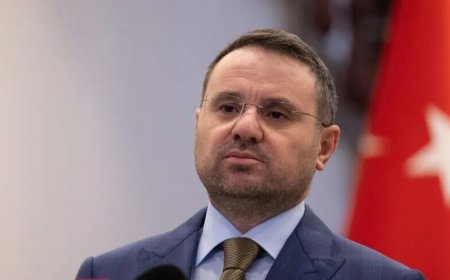
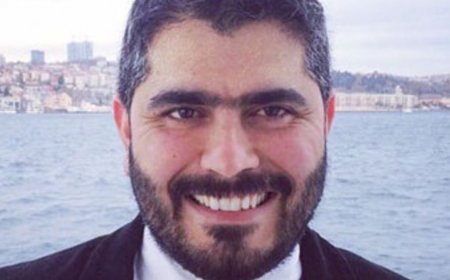
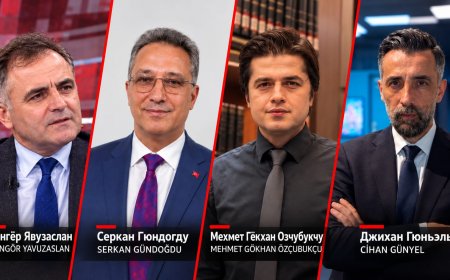
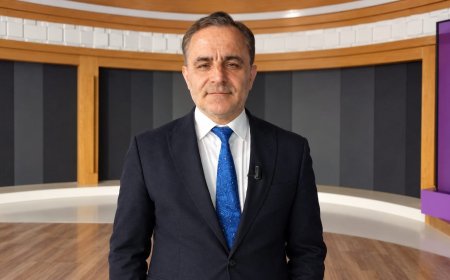
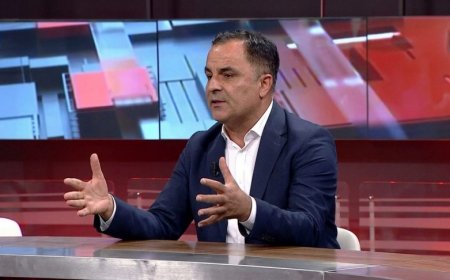
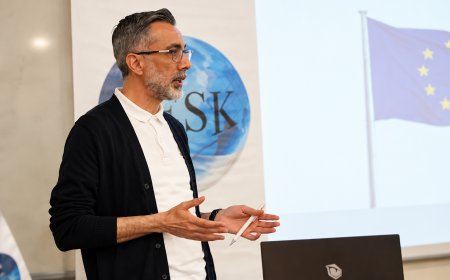
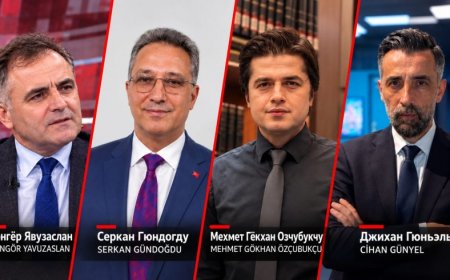
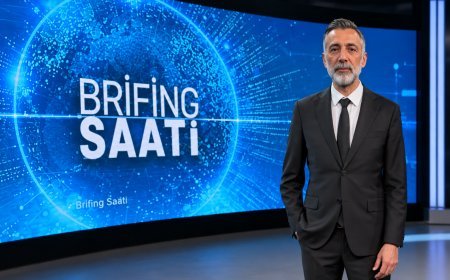
Cihan Günyel is a Turkish political scientist, PhD in Political Science, and a specialist in international relations and international security.
He graduated from Istanbul University and received his master’s degree from Kadir Has University. In 2021, he completed his doctoral dissertation at Istanbul Gelişim University on “The Place of Black Sea Security in the Formation of NATO Identity.”
His academic interests include NATO-Russia relations, the European security architecture, and theories of international relations. He is the author of academic publications and regularly appears as an expert on Turkish television, including CNN Türk.