










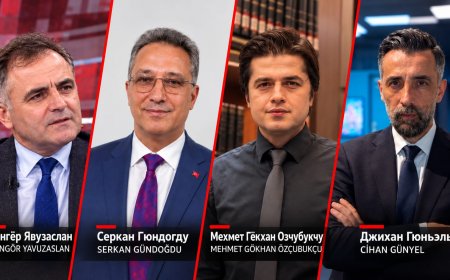






Güngör Yavuzaslan: Turkey and Russia Are Building a Model of “Competitive Cooperation”
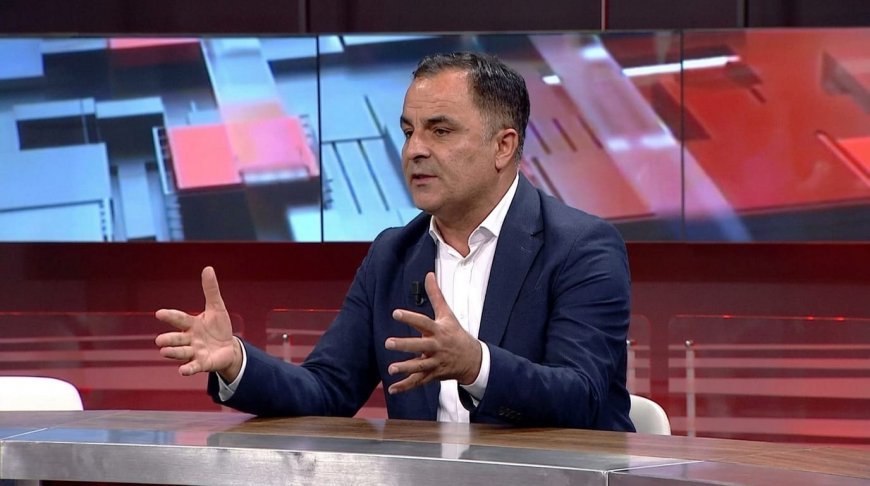
Turkish journalist and foreign policy commentator Güngör Yavuzaslan on Ankara’s strategic autonomy, its model of “competitive cooperation” with Moscow, and Turkey’s growing geopolitical weight in an increasingly multipolar world
Exclusive interview for RusTurkey.com
RT: Today, Turkey is developing its relations with both the West and Russia primarily on the basis of its own national interests and is pursuing an increasingly independent foreign policy. How is Ankara’s strategic autonomy changing the nature of Turkish-Russian relations?
Güngör Yavuzaslan: Turkey’s complete departure from the reflexes of the Cold War era, when it was seen as the “forward outpost of the West” or a “flank country,” represents a revolutionary shift in Ankara’s foreign policy.
The “strategic autonomy” pursued by Ankara has moved Turkish-Russian relations away from an asymmetric framework and placed them on the basis of interaction between “equal actors” guided by mutual and rational interests.
By abandoning the role of a blind executor of Western policies aimed at containing Russia, Turkey has placed its own national interests at the centre of its foreign policy, including energy security, counterterrorism, and regional stability.
This independent position has enabled Moscow to view Ankara not merely as a NATO member, but as “a reliable partner and an independent centre of power capable of making its own decisions.”
As a result, the relationship has evolved into a realistic model of “geopolitical equilibrium”: pragmatic, removed from ideological constraints, based on leader-level diplomacy, and capable of managing mutual interdependence.
RT: Turkey and Russia interact simultaneously in the Black Sea region, the Caucasus, Central Asia, and the Middle East, although their interests do not always coincide. Can we say that a distinctive model of relations has emerged in which two regional powers are capable of managing their disagreements without undermining political dialogue?
Güngör Yavuzaslan: Absolutely. In international relations literature, this new model has been described as “competitive cooperation” and “regional compartmentalization.”
Turkey and Russia demonstrate a mature approach to statecraft by preventing disagreements in one region from poisoning cooperation in another.
For example, in Syria, particularly regarding Idlib and the Syrian National Army (SNA), we find ourselves on opposing sides, yet we are still able to maintain the Astana process at the negotiating table.
In the Caucasus, during the Karabakh war, Turkey supported Azerbaijan on the battlefield with its full strength, and immediately afterwards managed to establish a Joint Monitoring Centre with Russia.
The same pattern applies to the Black Sea region and the Ukrainian crisis, including the grain corridor and strict adherence to the Montreux Convention.
This unique model is one of the world’s most successful examples of a strategy based not on freezing crises, but on managing them while keeping diplomatic channels open at all costs.
RT: As a multipolar world order takes shape, Turkey’s geopolitical weight as an independent centre of power continues to grow. In your view, how will Turkey’s growing geopolitical influence affect its relations with Russia in the coming years?
Güngör Yavuzaslan: At this historic turning point, as we approach the end of unipolar American hegemony, or imperialism, and the “law of the jungle” it has imposed, as our Foreign Minister Hakan Fidan has repeatedly described it, Turkey is becoming one of the key “central countries” of the emerging world.
Turkey’s growing geopolitical weight will continue to deepen its relations with Russia in the coming years. However, this deepening will take place in an environment in which Ankara’s “red lines” are defined much more clearly.
The potential for cooperation in areas such as energy, including the Akkuyu Nuclear Power Plant and gas hubs, logistics corridors, including the Zangezur Corridor and the Middle Corridor, and the defence industry will continue to grow. At the same time, through the Organization of Turkic States (OTS), Turkey will become a more active player in shaping developments in Central Asia and the Caucasus.
Meanwhile, taking into account the new regional alliances, particularly the “Mecca Alliance,” formed in the spirit of President Recep Tayyip Erdoğan’s principle that “the world is bigger than five,” Russia will encounter at the regional level not a Turkey that takes instructions from the West, but a strong Turkey that shapes the order in its own geopolitical neighbourhood.
This will be particularly evident in Syria, where Turkey seeks to protect the rights of Turkmens in the region, eliminate what it describes as a terrorist corridor, and pursue an uncompromising security policy in response to Israel’s expansionist policies.
This will inevitably make bilateral relations far more respectful, uncompromising, and consequential for the global balance of power.
About the Expert
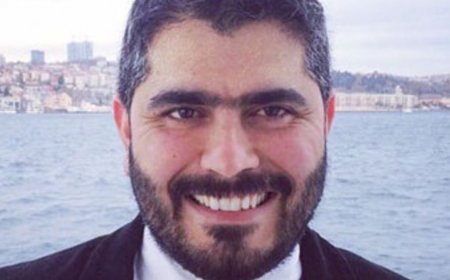
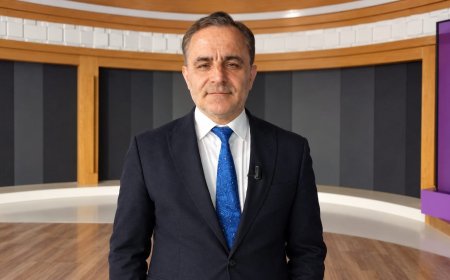
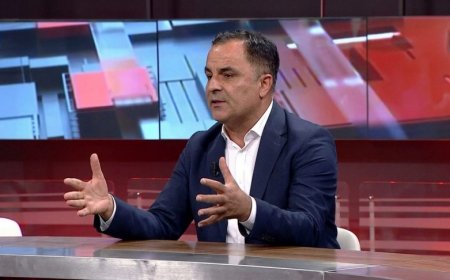
Güngör Yavuzaslan is a Turkish journalist, writer, and foreign policy commentator. Born in Bartın in 1974, he graduated from the Accounting Program at Zonguldak Karaelmas Vocational School in 1998.
He worked as a columnist and managing editor for the newspaper Bartın Değişim and currently heads the editorial team of Kerkük'ün Sesi (“Voice of Kirkuk”). He has served as chairman of the Bartın Journalists Association, a board member of the Black Sea Journalists Federation, and president of the International Association of Journalists of Turkic-Speaking Countries.
His areas of expertise include the Turkic world, the Middle East, and foreign policy. He regularly appears as a political commentator on television and in news media.