











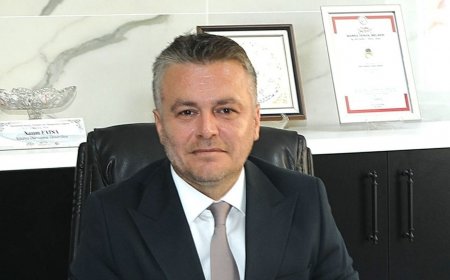

Nazım Fatsa: Turkish-Russian Relations Need an Institutional Footing
Turkish international relations expert Nazım Fatsa answered RusTurkey's questions about how Turkey and Russia can cooperate in the South Caucasus and Central Asia, what Ankara's interest in BRICS brings to bilateral ties, and what is needed for relations between the two countries to remain stable under any leaders.

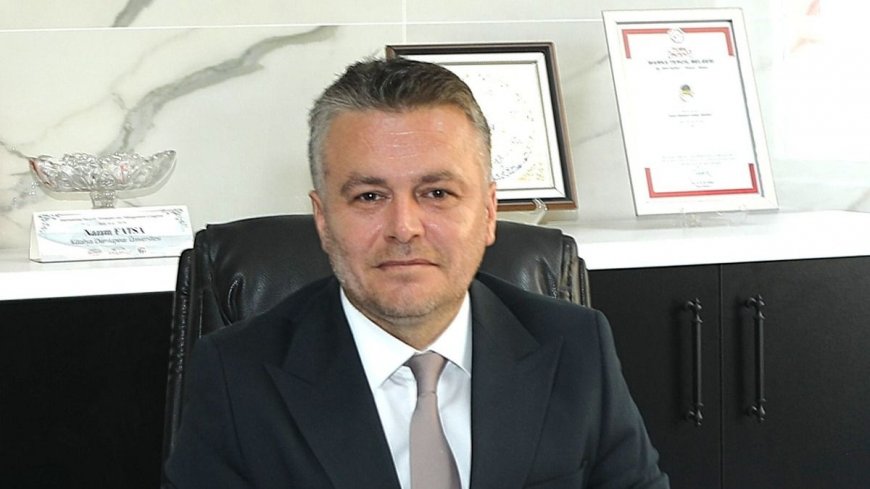
Turkish international relations expert Nazım Fatsa answered RusTurkey's questions about how Turkey and Russia can cooperate in the South Caucasus and Central Asia, what Ankara's interest in BRICS brings to bilateral ties, and what is needed for relations between the two countries to remain stable under any leaders.
- In which areas can Turkey and Russia contribute to regional cooperation in the South Caucasus? How should the region's countries' own interests be taken into account in this process?
Looking at the South Caucasus within the framework of Turkey's and Russia's regional policies, I single it out as a space of geopolitical and diplomatic engagement where durable cooperation can develop - on the indispensable condition that the countries of the region, Azerbaijan, Armenia and Georgia, take part in decision-making as sovereign and equal parties. I believe Turkey and Russia can help realize this potential by developing transport links, simplifying trade and customs procedures, supporting infrastructure investment and creating diplomatic confidence-building mechanisms.
In this sense, it seems to me that building a sphere of influence in the region divided only between Ankara and Moscow would breed new relationships of dependency rather than strengthen regional cooperation. I want to stress this in particular: a repetition of the strategic miscalculations and errors of diplomatic timing made over the Zangezur corridor question will damage Russia's regional influence. In the process that has taken shape between the 2020 trilateral ceasefire agreement and the TRIPP initiative that appeared in 2025 - the “Trump Route for International Peace and Prosperity” - one can see a weakening of Russia's defining role in regional mediation and transport regulation, and an expansion of the diplomatic and economic role of the United States. At the same time, this development should not be assessed as a complete transfer of control over security in the region and strategic control over transport arteries to Washington. The process also raises the question of the extent to which Russia's military and diplomatic commitments in Syria and Ukraine limit its freedom of action in the South Caucasus.
I believe that assessing such risks of miscalculation and tension in Ankara's and Moscow's regional policies against the three political criteria I propose - sovereignty, the sharing of benefits, and freedom of foreign-policy choice - will yield positive results. These criteria require that projects rest on the explicit consent of the countries concerned and on their sovereign rights, that economic benefits and costs be distributed fairly, and that no country of the region be forced to give up its relations with other external partners.
- How do Turkey and Russia interact in Central Asia? In which areas are there opportunities for cooperation, and where do their interests diverge?
A fresh topic that entered the agenda thanks to the proposal made by Kazakhstan's president Kassym-Jomart Tokayev at the 13th summit of heads of state and government of the Organization of Turkic States (OTS) in November 2026, and to the positive remarks of Kremlin press secretary Dmitry Peskov on the matter, now stands before us as a new diplomatic step in Central Asia. Frankly speaking, it is not hard to assume that Tokayev's proposal will find approval in Moscow as well - the positive assessments from Kremlin press secretary Dmitry Peskov confirm this assumption. But, as I particularly noted in my answer to the first question, Russia's trade and economic influence in the region, weakened after the Zangezur corridor, will undoubtedly take concrete shape again on the basis of the Middle Corridor, and this will give new dynamism to the countries of the region, and above all to Turkey.
The Middle Corridor, which occupies an important place on the East-West axis and matters to both China and Europe, will come to the fore as a new alternative for Russia, which, I believe, because the Northern Corridor is effectively out of use due to the armed conflict in Ukraine, will want to regain a dominant position on trade routes. Ultimately, I believe that Russia's say in the spheres where the OTS member states of Central Asia are developing will influence the regional balance of power more directly, as military potential and security partnerships; therefore the potential for competition will be even higher. It is also apt to say this: the motives behind the defense cooperation being developed with the countries of Central Asia may hold for Moscow and Ankara the potential to ensure that the entire Pacific energy flow directed toward the western axis remains under their own control.
In this connection, I believe that sitting exactly in the middle of the West-Asia-Pacific axis that is drawing together or clashing in the new world order, while it will have its drawbacks in some places, also contains the opportunity to be the power factor that holds the arm of the scales in its hands.
- What does Turkey's interest in BRICS bring to its relations with Russia? What opportunities for cooperation might arise on this platform?
I believe that in a certain sense, by complementing its relations with Russia with a valuable multilateral platform whose participants are not only the two of them, Turkey shows that its rapprochement with Russia is not taking place on a bilateral basis alone and that these relations are more multilateral and more valuable. Perhaps through this platform Ankara extracts a very pragmatic benefit: it is not seeking direct strategic alignment with Moscow, but merely diversifying its external partnerships and creating more room for maneuver on the international stage. Indeed, assessing this platform's opportunities, I see very interesting prospects: not only bilateral trade relations, but also cooperation with developing economies on development projects in transport, energy and digitalization, and the working out of a common position on questions of global governance.
At the same time, for Turkish-Russian relations this platform is, I believe, no magic wand that will solve everything. What I consider truly successful is the ability to implement transparent and concrete projects that bring mutual benefit, rather than symbolic rapprochement with non-Western alternatives. Therefore, in my view, Turkey needs not to transfer its current dependence on the West onto another power, but to genuinely increase the number of its options by building true strategic autonomy.
In my opinion, thanks to this platform there is a chance of bringing to life not only trade between the two countries, but also promising economic cooperation that embraces other rising powers as well - giant projects (energy, digitalization and so on).
- What must change in the relationship for Turkish-Russian ties to remain stable no matter who leads the two countries?
Before answering the question, I think it is worth asking whether the two countries have stable relations now. The Russian aircraft shot down by Turkey in 2015 and the assassination of Ambassador Karlov in 2016 are diplomatic crises that should be viewed from this angle. Both crises, in essence, became a test of the two countries' leadership qualities and diplomatic prudence toward each other. If one takes into account that crises this grave were settled peacefully and that peace between the countries has been preserved to this day, then I think it would be right to say that contemporary Turkish-Russian diplomacy stands on a solid foundation. Here, credit is also due to the leaders of both countries.
But alongside this, it is important that the continuity ensured by the diplomatic will of leaders be preserved after their terms of office end as well. I see no contradiction between giving due credit to the current diplomatic success and asking by what mechanisms this success will be protected in the future. On the contrary, turning the leaders' will to overcome crises into an institutional order of work is the main condition for achievements to become permanent.
Let us turn to the question of lasting peace and stable relations. Durable diplomatic relations, in my opinion, move on a true course at a negotiating table where, under all circumstances, the core interests of both countries are defended and respected. The main thing that must change between Turkey and Russia is this: relations must rest on institutional trust just as they do on personal trust. Sustainable stability is possible not so much through the disappearance of differences of interest as through an understanding of the framework and the methods by which these differences are to be managed.
In this connection, what proves important is not only how well the leaders come to terms with each other, but also the extent to which diplomacy is capable of working when they disagree. I believe that for Turkish-Russian relations to be preserved no matter who leads the two countries, a structure is needed in which personal closeness is the facilitating factor, while institutions and mutual commitments are the load-bearing element.
Background:
Nazım Fatsa, born in 1986, works as an executive in the public sector. He graduated from Istanbul University (2008) and Anadolu University (2017) and is currently continuing his education in a thesis master's program at the Department of International Relations at Dumlupınar University in Kütahya. His main areas of work: international relations, regional security dynamics, intelligence diplomacy and counterintelligence (in particular, the Iranian intelligence structure).
Самое важное за день — без воды