















Murat Can Öztürk: War must be the last resort
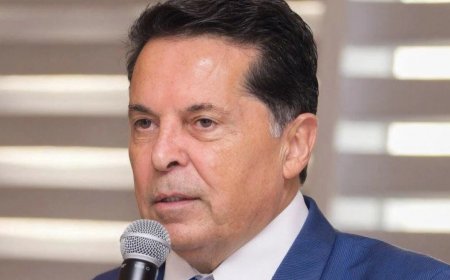
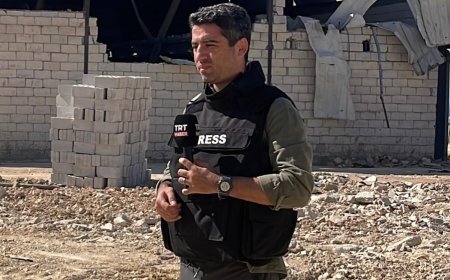
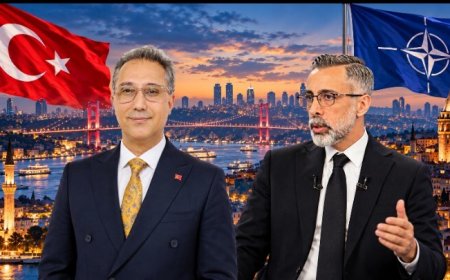
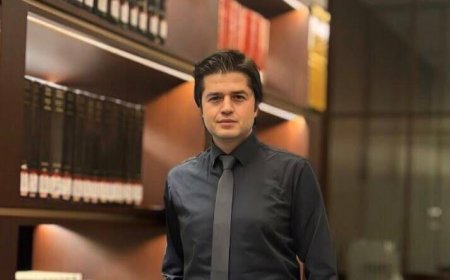
Murat Can Öztürk spoke about how working in conflict zones changed his view of war, what happens to civilians over years of hostilities, and how drones are changing reporters' work on the front line. He also dwelled separately on the risk of the Russia-Ukraine conflict expanding and on why Turkey seeks to maintain relations with both countries.

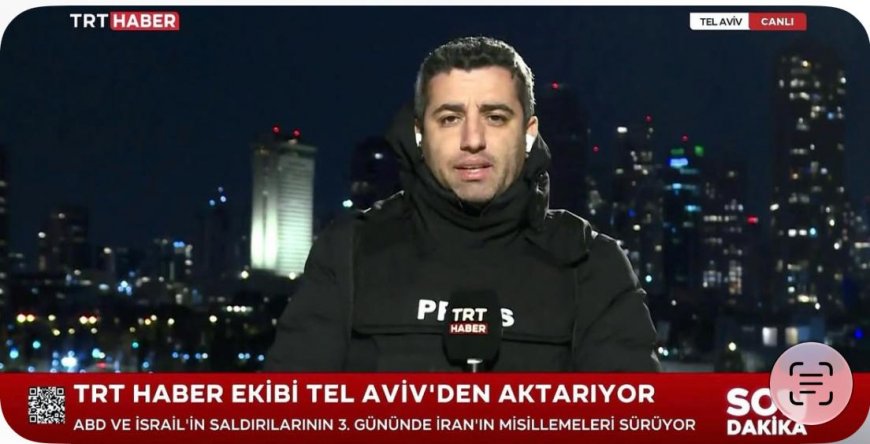
In an interview, war journalist Murat Can Öztürk spoke about how working in conflict zones changed his view of war, what happens to civilians over years of hostilities, and how drones are changing reporters' work on the front line. He also dwelled separately on the risk of the Russia-Ukraine conflict expanding and on why Turkey seeks to maintain relations with both countries.
War as a last resort
- You have worked in various hot conflict zones. Which of your ideas about war changed after that experience?
- Having seen these difficult regions, I understood once again that, whatever the reason, the state and the people must regard war as a last resort and that diplomatic channels must be used to the very end to prevent conflicts; I understood once again what homeland and state power mean. Conflict zones showed me that even the worst state is better than the absence of a state and a homeland... Because in the regions I have been to, once state governance weakens, obscure groups and formations declaring themselves the absolute authority begin turning civilians' lives into hell. Everyone who takes up arms proclaims himself master of the territory he is on, bursts into people's homes, and can kill and kidnap them without any questions asked. Such criminal offenses as looting, theft, robbery and rape multiply. Criminals and criminal formations, infiltrating terrorist organizations, get the opportunity, under the cover of a political goal, to take their mafia dealings, including trafficking in organs, children and women, to a new level. Or, as the example of ISIS shows, radical terrorist organizations do not recognize the right to life of people with different views and can easily execute them. Moreover, those people do not even have to hold opposing views: these organizations can ruthlessly kill even apolitical people or let them rot in prisons for years.
As a result, broken families appear, instructive life stories of civilians who know nothing about the fate of their father, child or spouse. In other words, civilians, considered the most innocent side of war, perish not only from dropped bombs. The disappearance of state power, which ensures the safety of their lives in exchange for the taxes they pay, can leave them at the mercy or disfavor of dark figures.
Life under sirens
- How does the mental state of civilians change when a war drags on for years? What have you observed personally?
- I tried to observe especially closely the sociological and psychological state of civilians in conflict zones. The behavior of civilians differs from region to region. For example, Ukrainians, facing full-scale hostilities for the first time since World War II, in the first months could not leave their shelters for long stretches, and streets and avenues turned into ghost towns. As the conflict dragged on, the sound of sirens in city squares became habitual, panic in an emergency gave way, at least partly, to composure, and civilians adapted to life under bombs. These days the situation has reached the point where even a kamikaze drone falling into a stream of cars in the morning rush hour can no longer keep people from going outside for their daily needs.
In the Middle East the situation is different. From Syria to Palestine, especially in predominantly Arab areas, civilians fear death less than people in other regions. Because from cradle to grave they are forced to live in an environment where state power has never been fully established and where, for this reason, an orderly and safe way of life could not be created. From childhood, people perceive as a plaything not a doll or a toy car, but a weapon like a Kalashnikov. For example, the residents of Gaza are subjected to violence by Israel because they do not give up the lands of their ancestors and do not agree to leave their homes and homeland. Moreover, from birth, by virtue of their convictions, they know that to be killed by those they consider enemies means for them attaining the status of a shahid, and, believing that in the next life they will be rewarded for this, they are used to living reconciled with death.
However, if you look at the other side, that is, at the Israelis, we see a completely opposite state of mind. In West Jerusalem, Ashdod, Haifa and Tel Aviv it is quite common to meet well-dressed Israelis in any shopping mall who go shopping with a long-barreled weapon on their shoulder. As soon as sirens sound, cars moving along the highway stop immediately, and the Israelis in them move to the road barriers or under bridges and wait for the emergency to end. Or, if you hear such a siren while shopping in a store, the cashier will immediately drop work and run to a shelter, even if the cash drawer is open.
In the West Bank, Palestinians are subjected to inhuman treatment by Jewish occupiers. In this environment, where universal human rights are trampled, the plundering of a Palestinian's home, livestock, shop and property, and the causing of harm to them are considered something ordinary. Civilian Palestinians, exhausted by disproportionate violence, have effectively been turned into the living dead. As soon as they speak out against injustice, a sledgehammer immediately falls on them: they are intimidated and silenced. In East Jerusalem and the West Bank, neighborhoods surrounded by a separation wall or barbed-wire fences have been turned into open-air prisons; on the way to school, pupils are forced to pass through turnstiles under the watch of security officers. In other words, under such conditions a healthy state of mind for the people living in this region is hardly possible.
I want to add that I observed similar pictures in Syria as well. Terrorist organizations imposed their rules on local residents in the captured territories. After some time, the same territory would pass under the control of a force with a different ideology, and people, because of their ethnic or religious origin, were subjected to pressure, cruel treatment and torture; their already limited means of subsistence were taken away, or their children were forcibly taken under arms. All this inflicted heavy psychological trauma on civilians.
In a word, while some think about how to flee the conflict zone as quickly as possible, others have already resigned themselves to living with it...
Drones are changing frontline work
- How has the widespread use of unmanned aerial vehicles changed a journalist's ability to see with his own eyes what is happening on the front line?
- Today, armed and unarmed unmanned aerial vehicles are among the most effective tools of hybrid wars. Given that drones packed with explosives pose a great threat to any targets moving on the ground, civilian and military alike, a journalist's ability to move freely along the front line has become limited. After all, journalists working on the front line move either together with local formations or as part of military units as correspondents embedded with them, and therefore willy-nilly become open targets for flying kamikaze drones. The risk that an explosives-laden drone will catch up with a journalist in a military vehicle or in a civilian car that seemed suspicious is quite high.
On the other hand, black-and-white, color or thermal images from drones give journalists a useful source of information about the disposition of military forces in a hot spot. This footage helps journalists form a clear picture of the course of hostilities. After all, in traditional wars, where drones were not used, a journalist had practically no opportunity to fly over the front line in a military helicopter or aircraft, so aerial footage shot by drones makes it possible to create rich informational materials.
The risk of the war expanding
- In your opinion, what does the Turkish viewer miss when following the Russia-Ukraine conflict in the news?
- The Turkish viewer loses sight of the fears that the conflict may provoke a large-scale war and spread over a wider territory. Or, even if he knows about such a possibility, it may seem that he does not react, since he has no sufficient tools to prevent it. However, the confrontation between Europe and Russia, mutual statements increasing tensions, the danger of the use of nuclear weapons, the position of the US and China, and the absence of visible progress despite Turkey's calls for peace have for about four years kept the probability of a world war in view.
On the other hand, the risk of a new wave of migration, as during the civil war in Syria, has not grown to crisis proportions for Turkey, since most Ukrainian refugees preferred European countries. But this should not mean that it will not grow. Frankly speaking, one of the most painful consequences of the events in Syria, deeply felt by the Turkish people, was the large-scale migration crisis. Turkey does not want to face such a situation a second time. However, as the war drags on and other countries' military investments grow, one cannot ignore the likelihood that the hostilities will not be limited to Ukraine and Russia.
Although the Turkish people are not currently putting this risk at the top of the country's agenda, it cannot be denied that somewhere deep in their consciousness they remember that such a danger exists. After all, Turkey, which occupies an extremely important geopolitical position, strives to maintain warm relations with both countries, pursuing a neutral and peace-loving policy. Least of all would it want the risk of its army and people becoming a direct party in a possible series of conflicts that would erupt because of this war. It is inevitable that such a possibility would inflict wounds on all participants in the region that would be hard to heal.
Самое важное за день — без воды